by Debra L Scott
The Sacramento National Wildlife Refuge is a beautiful spot for a leisurely stroll, or a day of bird watching! A short distance off of I-5, you would expect it to be noisy and crowded. However, this peaceful 10,819 acre refuge was neither on the still Christmas day of our visit. It is about 70 miles north of Sacramento, between the towns of Willows and Orland. Dogs are permitted on a 6-foot leash.
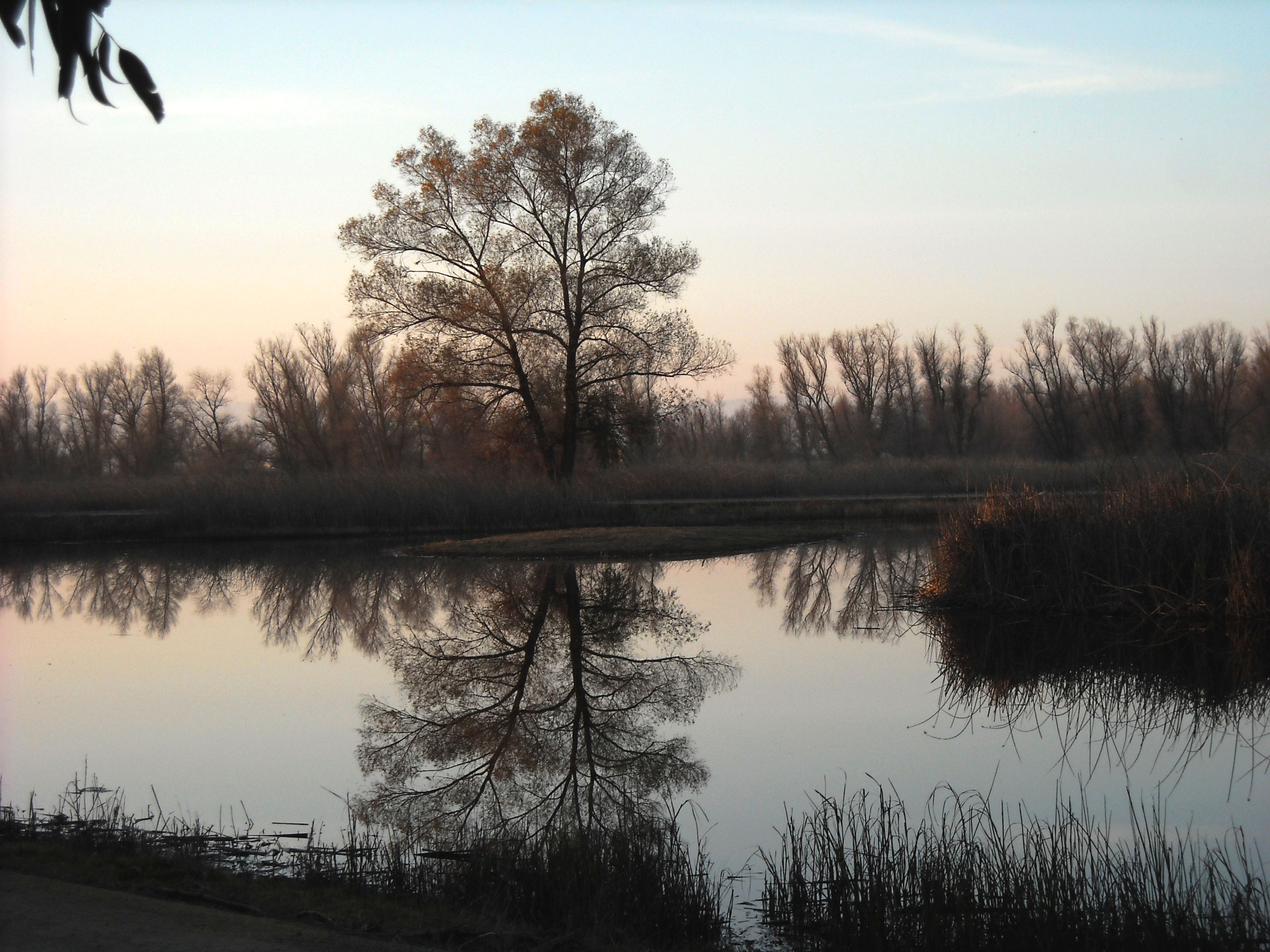
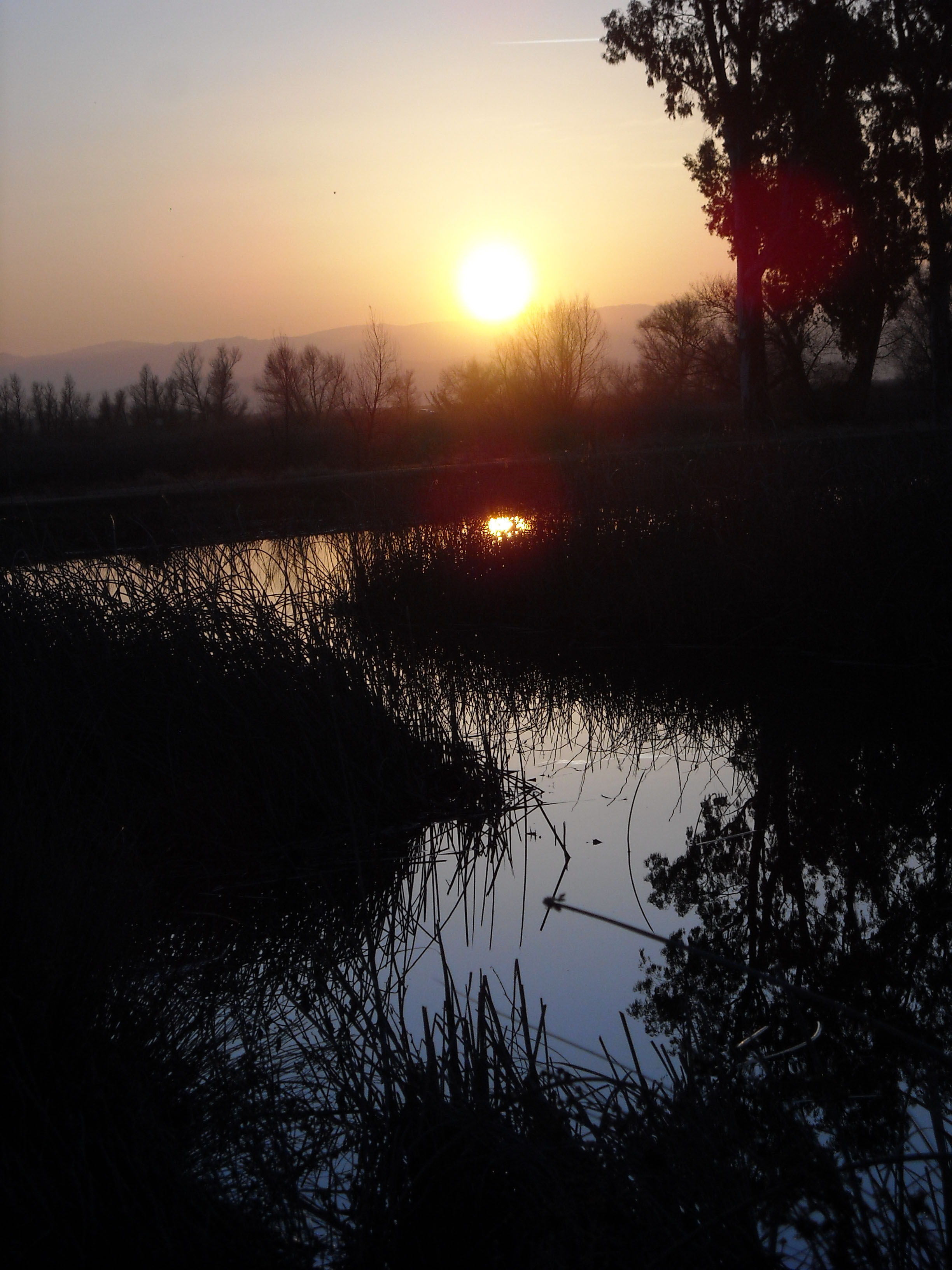
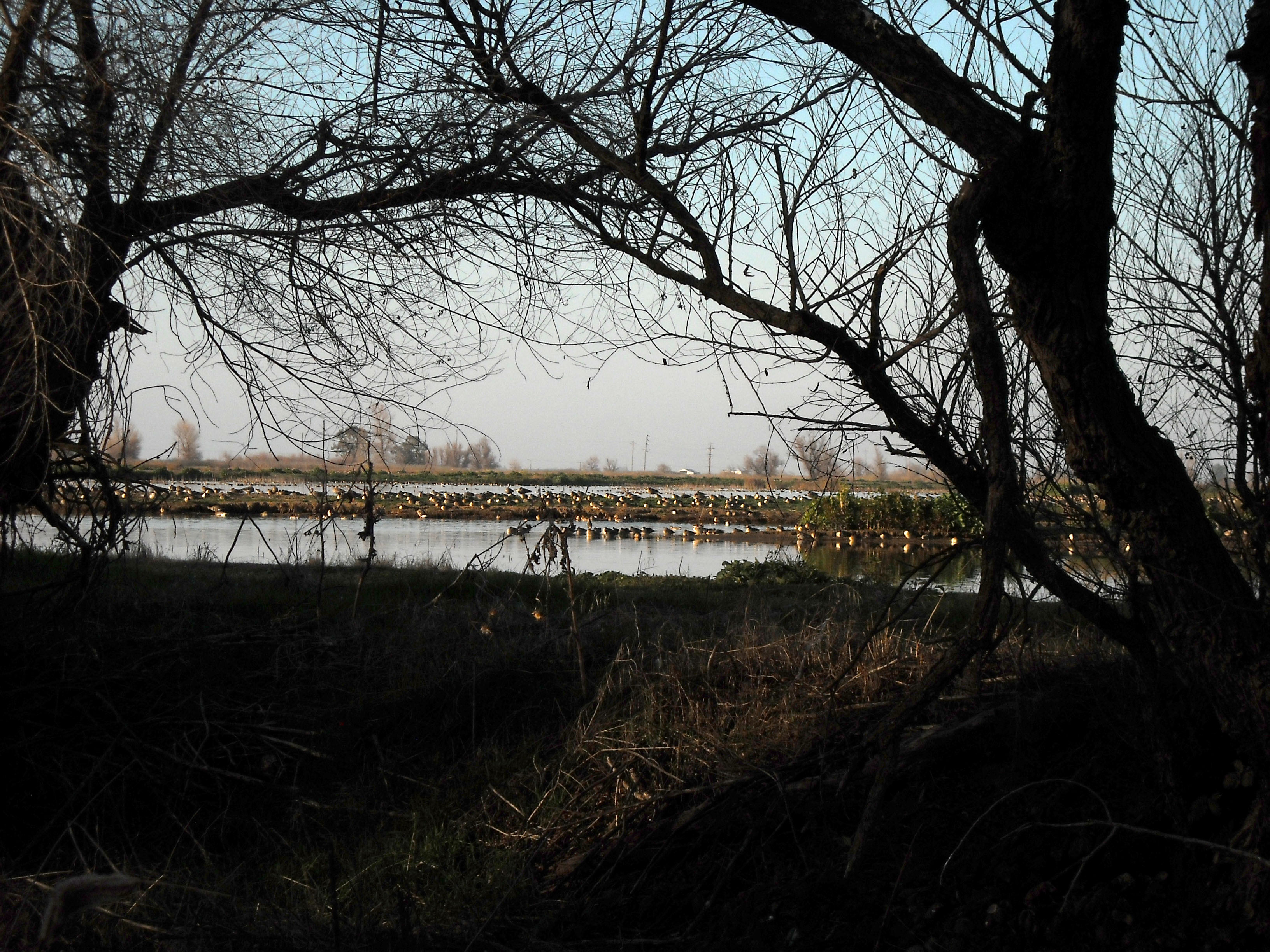
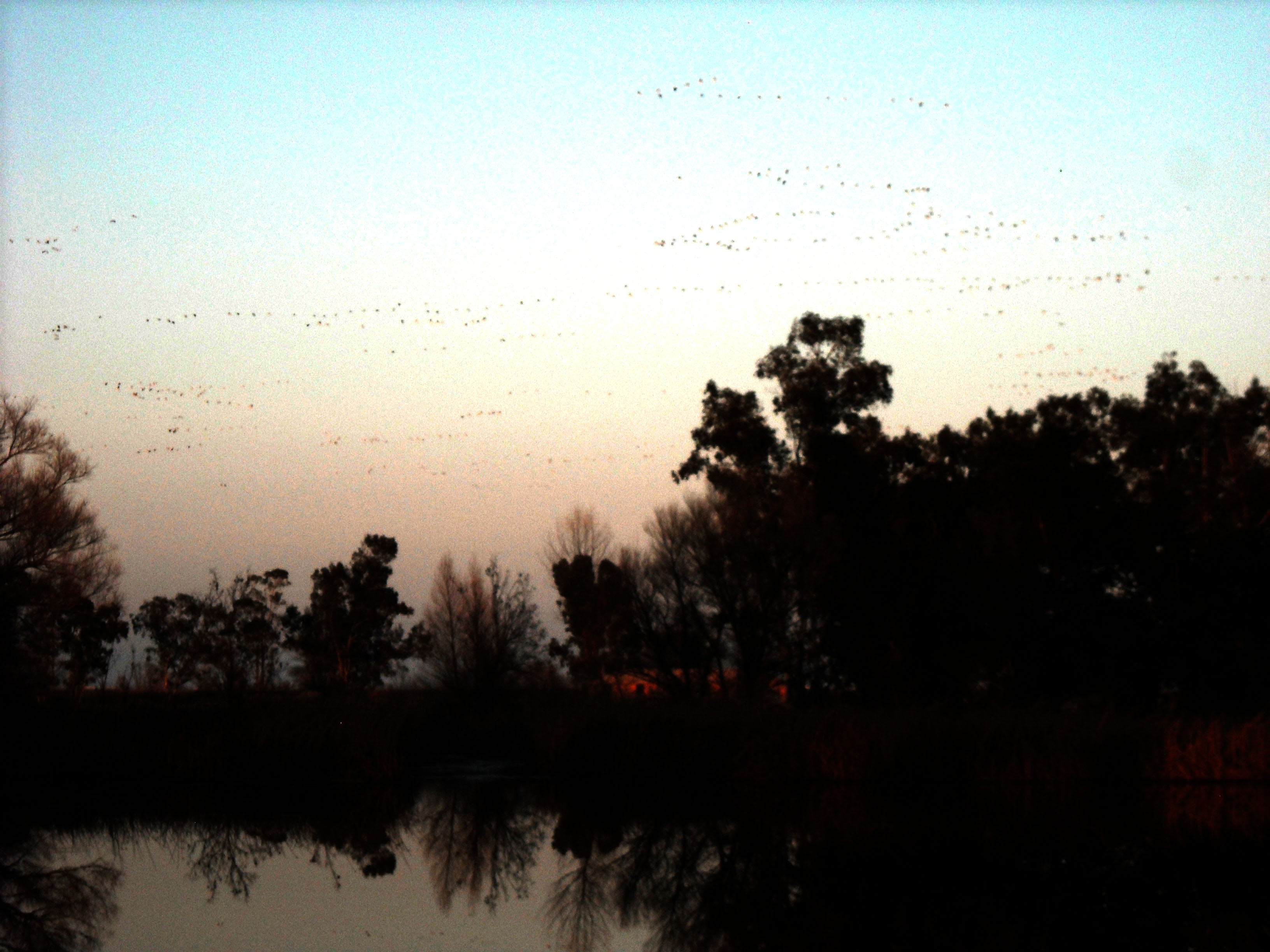
The refuge consists of a network of paths that wind around and through the wetlands area, with ponds, waterways, islands and lagoons. A popular migratory stop off, there are literally millions of birds here in the winter. The still water creates mirror like reflections of the reeds and trees… an artist’s or photographer’s delight. The downside? Seasonal hunting is allowed in the adjacent wetland areas, so the occasional pop of rifles disturbs the quiet, but not so much that it deters from the experience. “…the Sacramento NWR Complex helps provide habitat (resting and feeding areas) for more than 40 percent of the Pacific Flyway’s wintering waterfowl. More than three million ducks and one million geese migrate to the Sacramento Valley every fall.” (http://www.fws.gov/sacramentovalleyrefuges/)
Some recent fowl and wildlife sightings include: white-tailed kites, peregrine falcons, loggerhead shrikes, blue morph Ross Geese, the Eurasian wigeon (somewhat rare in the US) and an albino raccoon! Be aware that mountain lions have been seen in the refuge! (http://www.fws.gov/sacramentovalleyrefuges/pdf/Wildlife%20Observations/2012-13/November%202012%20Wildlife%20sightings.pdf) A colony of vultures roosted in the trees over the parking lot, eyeing visitors for possible dropped edibles.
Accessibility: National Golden Access Park passes gain free access, otherwise there is a $3 day use fee which I was told is going up to $6 in 2012.
There are choices for many types of mobility issues, including an alternate 6 mile paved track for cars to move slowly through the area. It intersects the walking trail but mostly sets off on a separate loop. Because of the height of the rushes however, walkers hardly realize they are there.
Walkers will find that the easiest track is on the north side of the entryway. Here the path is wide and flat with hard pressed dirt, circling two small lagoons. It is likely hard enough for wheelchairs and strollers and wide enough for families to enjoy walking together.
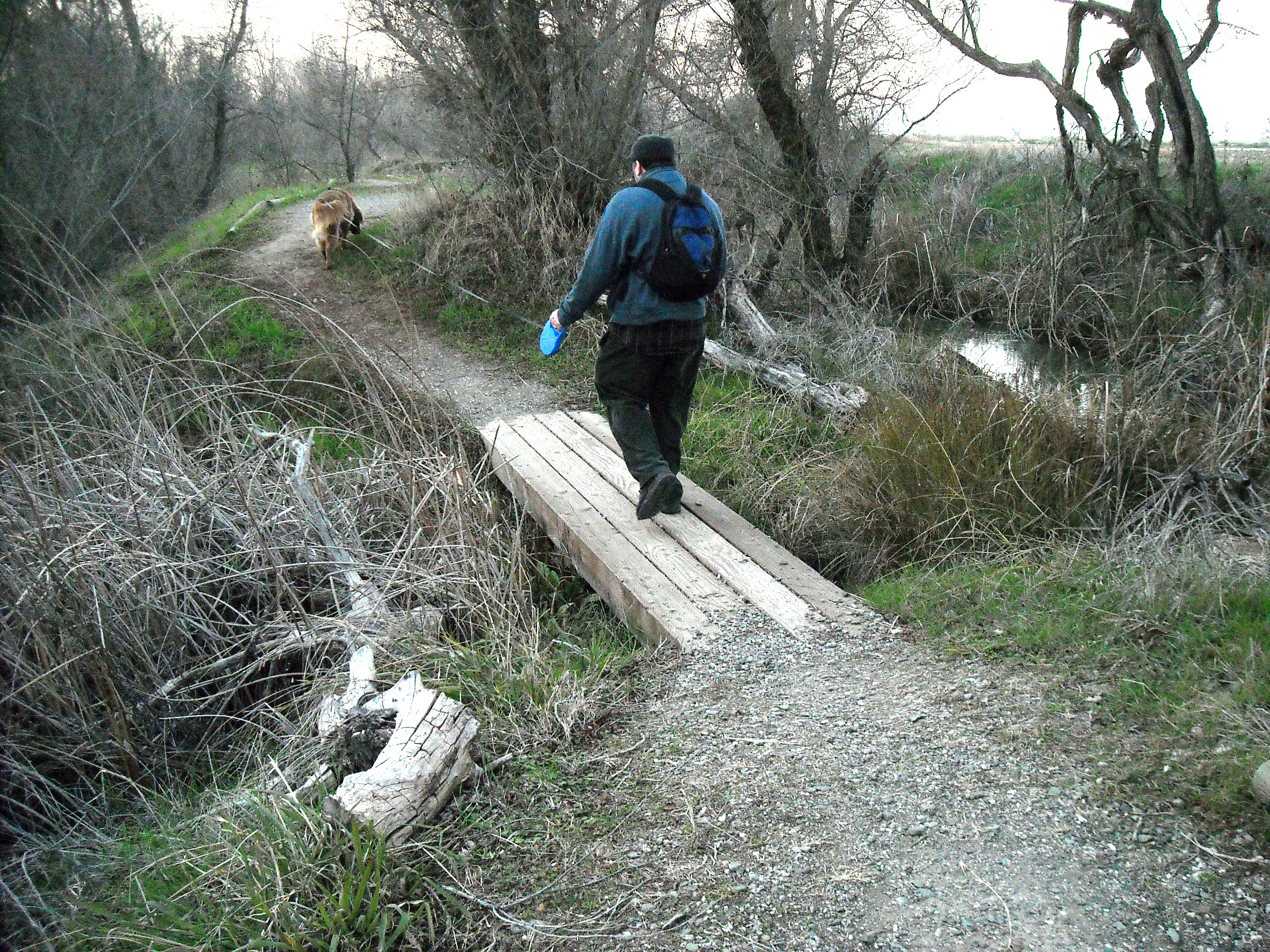
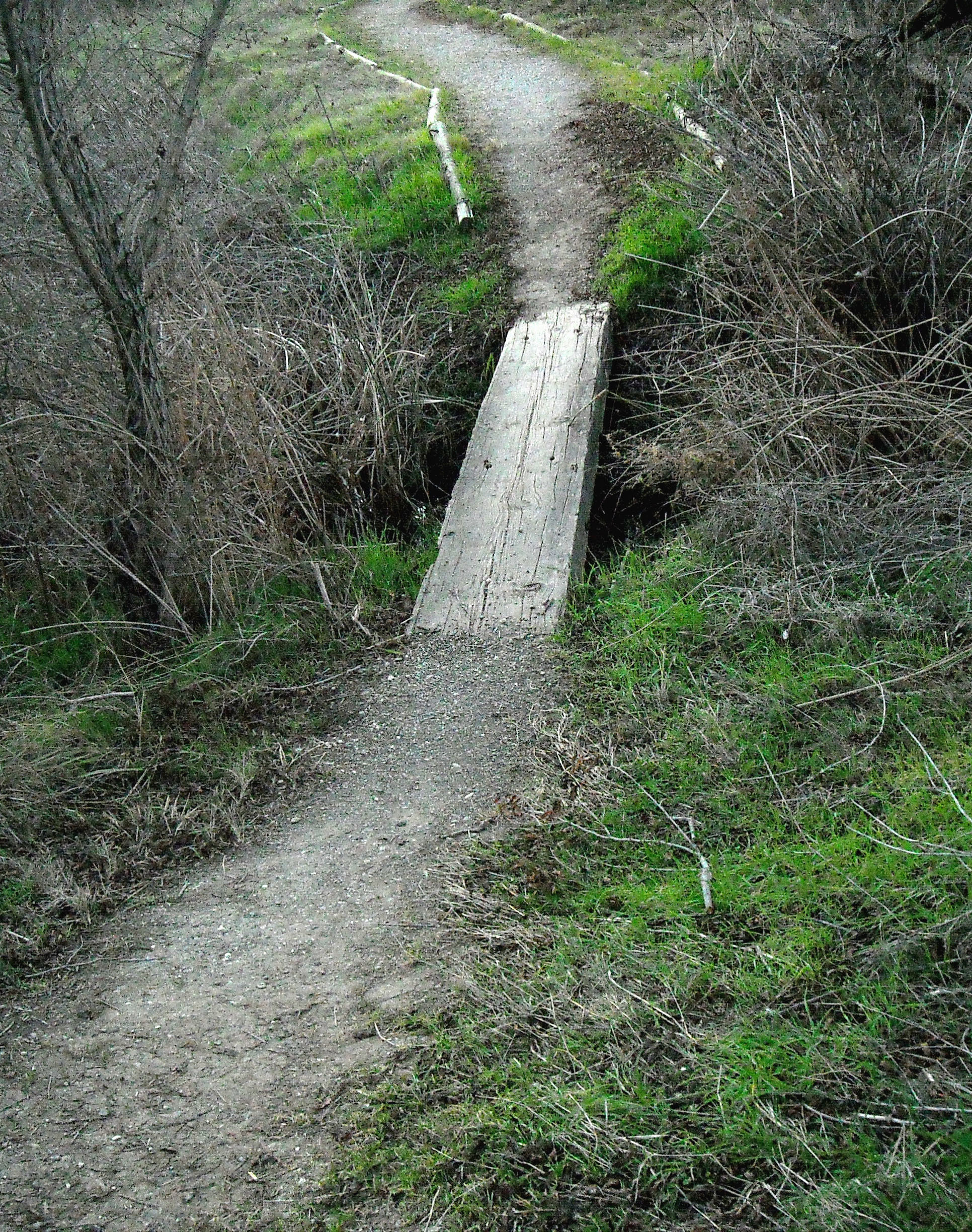
Branching off from this, to the north of the main lagoon, is a single file path through the trees which poses a few minor challenges like small but steep dips with crossings over wood bridges. The primitive bridge spans are four 6” planks set into the dip of the path lengthwise (about 24” wide) but a couple areas are only three wide (about 18”), see photos. My legally blind partner didn’t have too much problem navigating these except on the narrow spans; one step slightly off the line nearly toppled him into the ditch. If he’d been using his cane, it might have kept him more aware of the constraints.
The treasure here is that there is a stunning view shielded by the cover of trees to a magnificent lagoon area restricted from pedestrian intrusion. Look for the half log bench along the path and peer through the trees to the north. At this spot you can enjoy just sitting, or stand on the bench for a better view. The sound of this rich aviary display is truly magical, and worth stopping just to listen. This northern lagoon is restricted to vehicle access only, so it is literally packed with waterfowl of all types.
The southern half of the refuge consists of a raised earth mound track through the marshes. It is wide enough for families to walk together, but the path has more of a soft feel to it. Lightweight strollers are probably fine, but wheelchairs may find it a challenge in spots.
Walk quietly through the tall rushes, enjoying the birds and wildlife close up. There are smaller side paths to wander in for the adventurous, but probably not good for unsupervised children. It would be easy to lose sight of a little person here! It is a great place to set up tripod or easel, for close work.
The full loop is said to be 2 miles, but it felt much longer since we wound around things quite a bit exploring the crisscrossing paths. Be aware that this leg is very primitive, without available drinking water, and without tree shade. Do bring your own hydration, and of course, waste bags for dogs.
Driving directions: http://www.fws.gov/sacramentovalleyrefuges/pdf/Location%20Map/Driving%20Directions%20to%20Sacramento%20NWRC.pdf
Sacramento NWR Complex
752 County Road 99W, Willows, CA 95988 (this is NOT the address for the refuge!)
Phone: (530) 934-2801; Fax: (530) 934-7814
24-hour Information: (530) 934-7774
TTY: (530) 934-7135